Divorced From Reality
Court records raise questions about Melissa Hernandez’s struggle story of working through college as a single mom; Report threatens state intervention against County Dept of Children & Family Services


☕️MORNING BUZZ
Vol. VI, No. 1,335
—The story of Melissa Hernandez putting herself through college as a single mother raising two children has become one of the defining themes of her campaign for Congress.
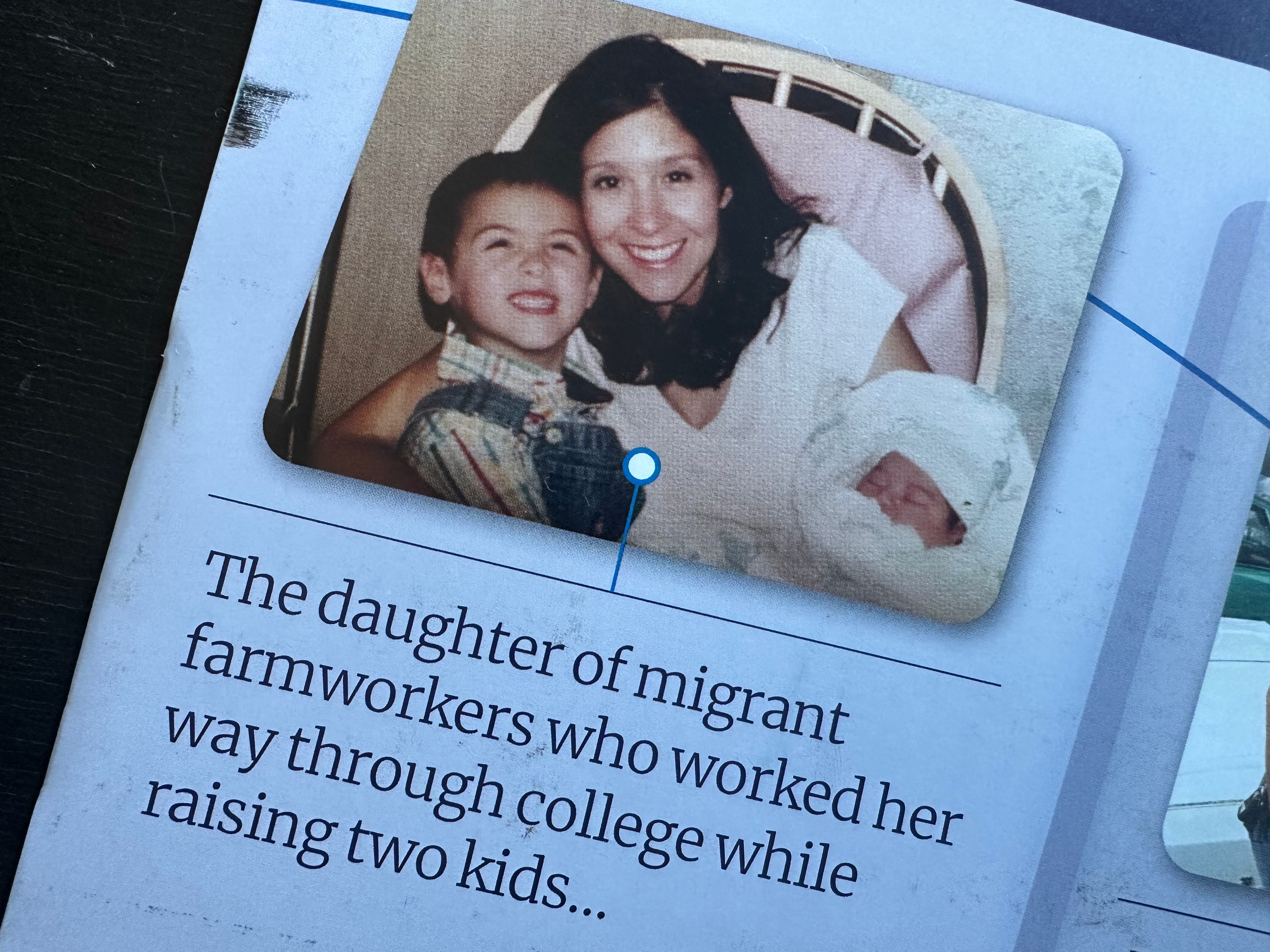
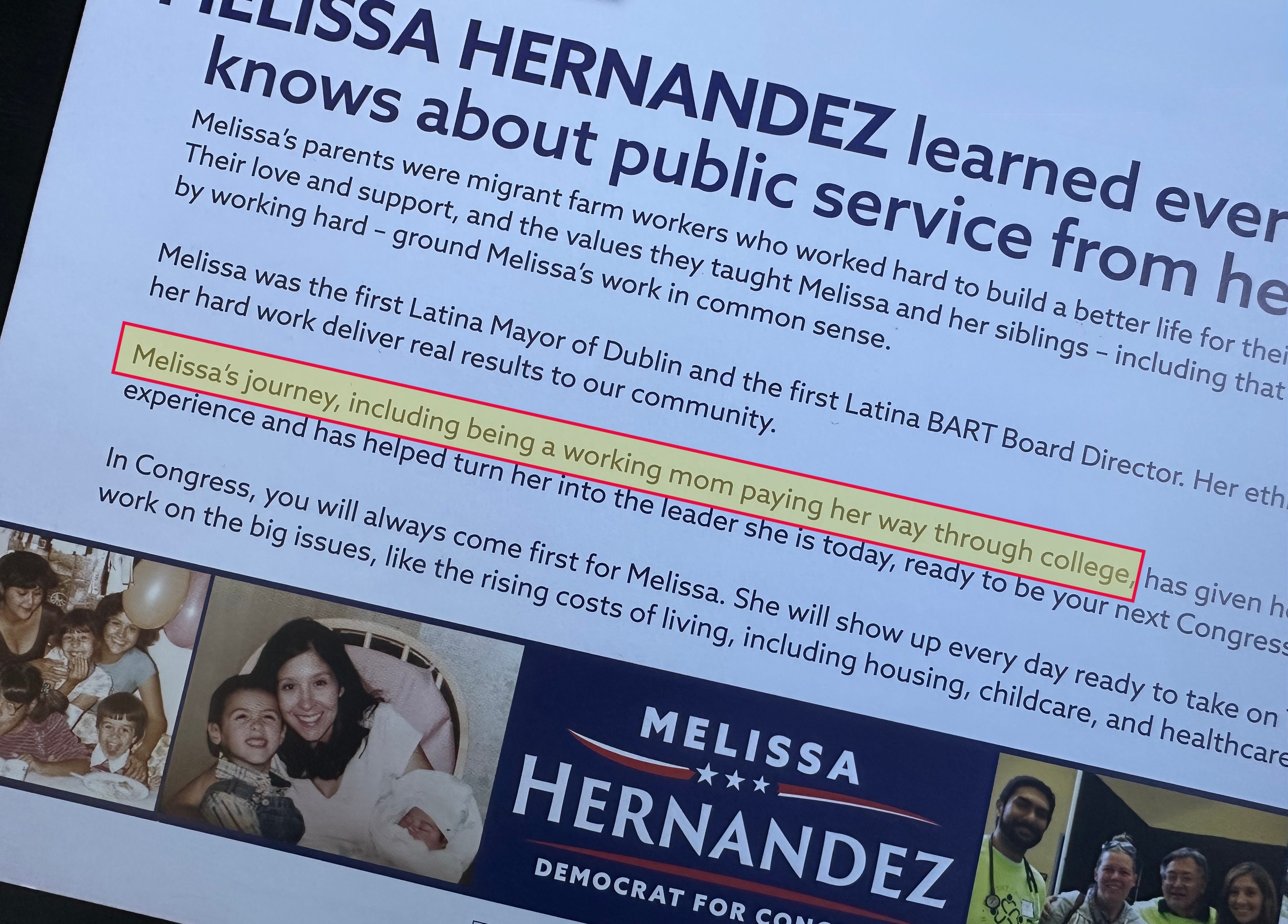
Campaign mailers, speeches and literature repeatedly describe Hernandez as “the daughter of migrant farmworkers who worked her way through college while raising two kids,” while another states she was “a working mom paying her way through college.”
But divorce records filed in Alameda County Superior Court between 2014 and 2016 provide a far more nuanced account of that period of Hernandez’s life.
While Hernandez’s description of being a single mother is not untrue on its face, she received great financial benefits that most single mothers have little access to lessening their day-to-day burdens, including generous spousal and child support, ability to live in a suburban single-family home, a Benz and a boat.
The court filings indicate Hernandez returned to Cal State East Bay on a part-time basis after separating from her husband and expected to complete her degree in January 2016. She did not until several years later at age 43.
Hernandez had long worked as an office manager for a dentist office, but only part-time. She was not idle, though, volunteering for the local Rotary, Little League, serving on a board appointed by Rep. Eric Swalwell, and preparing a run for the Dublin City Council, according to the filing.
But her estranged husband, a sales executive for a multinational cheese company, questioned Hernandez’s commitment to attaining her degree. “Melissa has been evasive about her school endeavors despite her equal obligation to support our children and her obligation to continue her own support.” A request for course taken since 2013 returned a single document detailing registering for two courses.
—The filings also show Hernandez received significant financial support during the divorce proceedings.
Court records awarded spousal support of $2,250 per month through 2021, child support for her teenagers beginning at $4,383 per month before increasing to $5,000, approximately $200,000 in a Morgan Stanley account, $10,000 to pay off credit card debt, and other marital assets, including a Mercedes-Benz and a boat. The settlement also provided for Hernandez to purchase her former husband’s interest in the family home.
Throughout the proceedings, Hernandez’s then-husband repeatedly questioned her educational progress and willingness to seek full-time employment. In court filings, he stated Hernandez had been “evasive about her school endeavors” and requested documentation of the classes she had taken since 2015. According to the filings, the response consisted of documentation showing enrollment in two courses.
The estranged husband again asked about Hernandez’s progress at school to no avail, according to a filing. “Melissa represented she would be done with school in January 2016.” he wrote in April 2016. “Like so many other statements, Melissa’s words were proven untrue,” he added.
He also requested that Hernandez undergo a vocational evaluation, which he initially offered to pay for, arguing she had sufficient time to work full time given her volunteer commitments. A later vocational evaluator ultimately recommended Hernandez continue working part time while completing school.
The divorce also became contentious over the date of separation, delaying resolution of property issues and spousal support. Hernandez initially disputed the separation date for one year, while her husband argued the marriage had effectively ended in September 2013.
The campaign’s repeated description of Hernandez “putting herself through college” and doing so as a “single mom” does not mention the financial support detailed in the divorce records, leaving voters to decide whether the campaign’s characterization fully reflects the circumstances documented in court filings.

—GET THE 411 ON THE 510—
Become an East Bay Insiders subscriber today and get FULL ACCESS to the inside scoop every weekday morning at 6 a.m.
IT’S WHAT THE INSIDERS READ.
🎙️EAST BAY INSIDERS PODCAST
NEW EPISODE THIS WEEKEND!
—Listen on Substack or download episodes at Apple Podcasts, Spotify, or wherever you get your podcasts.
COUNTY NEWS
CHILD SERVICES
—STATE TAKEOVER NEXT?—The California Department of Social Services (CDSS) has ordered Alameda County’s Department of Children and Family Services (DCFS) to respond by Aug. 6 to findings from a state review that identified practices posing risks to child safety and well-being.
—In a July 16 letter to Alameda County Assistant Agency Director Michelle Love, CDSS said an on-site review conducted in March examined the county’s child abuse and neglect hotline, emergency response practices, timeliness of services, workforce challenges, and the agency’s ability to implement corrective actions.
—“The findings collectively suggest that while foundational practice requirements are present in many cases, the documentation, agency infrastructure, tool compliance, and continuity of staff work do not consistently reflect the standards necessary to ensure child safety, permanency, and well-being,” according to the CDSS’ report.
—CDSS concluded the findings warrant state intervention and ongoing monitoring under California law to ensure Alameda County complies with child welfare requirements. The agency also said it will provide technical assistance while working with the county to address the identified deficiencies.
—On Tuesday, Love told the Board of Supervisors that state laws and regulations are too onerous.
—“I think what state law does is it, in the effort to improve the safety of children, it creates a bigger burden and workload for child welfare staff which is sometimes an impediment in hiring staff, but it does increase their responsibilities every day, and it makes the job extremely difficult.”
—Alameda County Supervisor David Haubert also blamed Sacramento leaders. “I don’t know how you get your job done, but I would suggest that we push back and say, help us with the decisions that can be made at the state level, fully fund the mandates that you impose upon us, eliminate the redundancies and start listening to our frontline staff who know how to do their job and make state laws that help us do our job.”
—Haubert’s line of attack amid the blistering report and possible state intervention facing the beleaguered county department appeared to make some fellow supervisors uncomfortable.
—Alameda County Supervisor Nikki Fortunato Bas added, “I just want to say one more time because we do have members of the public who join our meetings or who watch them afterward that we are taking all of this seriously.”
BOARD OF SUPERVISORS
—GAS STATION HEROIN—Growing national and local concerns over the safety of kratom and a synthetic version of the unregulated drug—sold primarily in gas stations and smoke shops—failed to fully sway Alameda County Supervisor Nate Miley on Monday during a hearing on a proposed retail sales ban that also includes nitrous oxide products.
—Alameda County health officials proposed banning the retail sale of nitrous oxide and related devices, along with natural kratom leaf and 7-OH (also known as 7-hydroxymitragynine), a synthetic kratom derivative sometimes referred to as “gas station heroin.”
—Alameda County Supervisor Lena Tam, who also serves on the Board of Supervisors’ Health Committee, lamented that the county appears to be chasing one addictive substance after another.
—The Health Committee forwarded a separate ordinance banning the retail sale of nitrous oxide in unincorporated Alameda County with little discussion on Monday. In May, the Alameda City Council approved a similar ordinance.
—Miley expressed support for that proposal and said he hoped other jurisdictions would adopt similar bans to avoid a patchwork of enforcement.
—The discussion shifted when the committee turned to kratom and 7-OH.
“This is repugnant. Gas station heroin. That’s just sickening,” Miley said of 7-OH.
—But Miley began to question whether natural kratom should be excluded after hearing testimony from speakers who said the product has therapeutic benefits. He acknowledged making a similar distinction during the early debate over medical marijuana.
—“I don’t want to do any harm to folks who are taking a product that is helping them,” Miley said.
—Miley ultimately withheld his support for banning the retail sale of kratom and 7-OH. Instead, he moved to send the proposed ordinance to the Board of Supervisors’ Planning Committee without a recommendation from the Health Committee. The proposal is expected to return to the board in mid-September.
—His hesitation came despite strong warnings from Alameda County Health Officer Dr. Nicholas Moss. Moss, who led the county’s public health response during the COVID-19 pandemic, said no large-scale clinical trials have established kratom’s safety or effectiveness.
—“It’s a drug. It should be regulated as a drug,” Moss said, adding that consumers deserve clear information about dosage, intended use, risks, and expected outcomes.
—A consultant representing the kratom industry argued that natural kratom and 7-OH are fundamentally different products and urged the county to remove kratom leaf from the proposed ordinance. Supporters of kratom repeatedly noted that the federal government is already moving toward banning 7-OH.
ELECTION 2026
🗓️97 days to November General Election
—PULLING PAPERS—The nomination period for candidates seeking office in the Nov. 3 General Election is now underway. Prospective candidates have until Aug. 7 to file nomination papers and qualify for the ballot.
—Here’s a look at the candidates who joined the field on Tuesday. *-incumbent.
DUBLIN
Kiran Mohammad - Mayor
Bhaskar Swaminathan - District 4
Shalini Bhandari - Dublin USD Area 3
LIVERMORE
Angela Brady - Livermore Joint USD Area 3
SAN LEANDRO
Nathan Johnson - District 1
UNION CITY
Qasim Lodhi - District 4
OHLONE COMMUNITY COLLEGE DISTRICT
Sonia Salwan - Area 6